

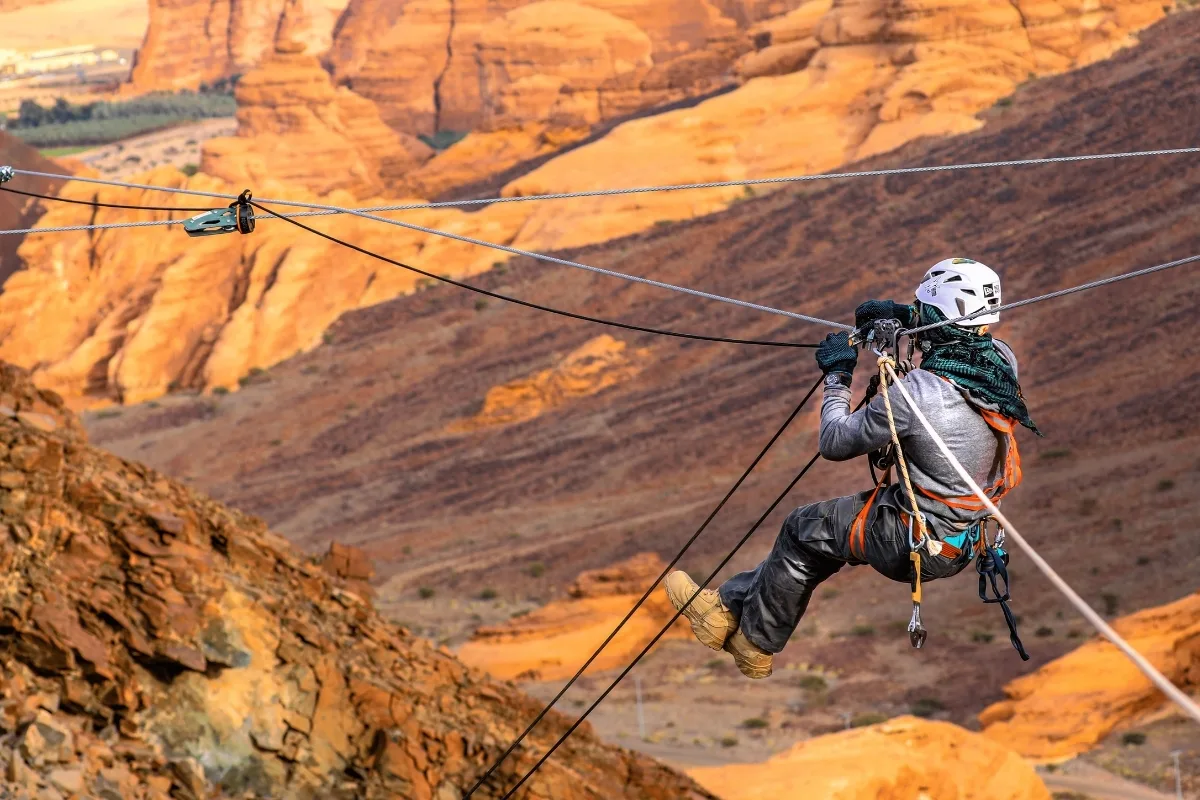
Among the full portfolio of commercial adventure attractions, few generate the concentrated commercial impact of a well-engineered zipline. A flagship zipline delivers a single high-adrenaline experience that guests can consume quickly, which means throughput can be extraordinary, ticket capture is fast, and social media reach is disproportionate. For resort operators, adventure park developers, and destination investors, the zipline is often one of the most efficient capital investments in the attraction portfolio, with attractive payback profiles in strong locations.
The financial upside is a direct consequence of engineering quality. A commercial zipline is a precisely tuned system of cable dynamics, structural anchoring, braking technology, and operational choreography. Every one of those elements affects the two variables that ultimately drive commercial return, hourly throughput and total cost of ownership. This article examines the engineering discipline behind commercial zipline installations and the practical decisions that determine whether a zipline becomes a top-performing asset or an underperforming capital drain.
THE PHYSICS AND PRECISION OF COMMERCIAL ZIPLINE ENGINEERING
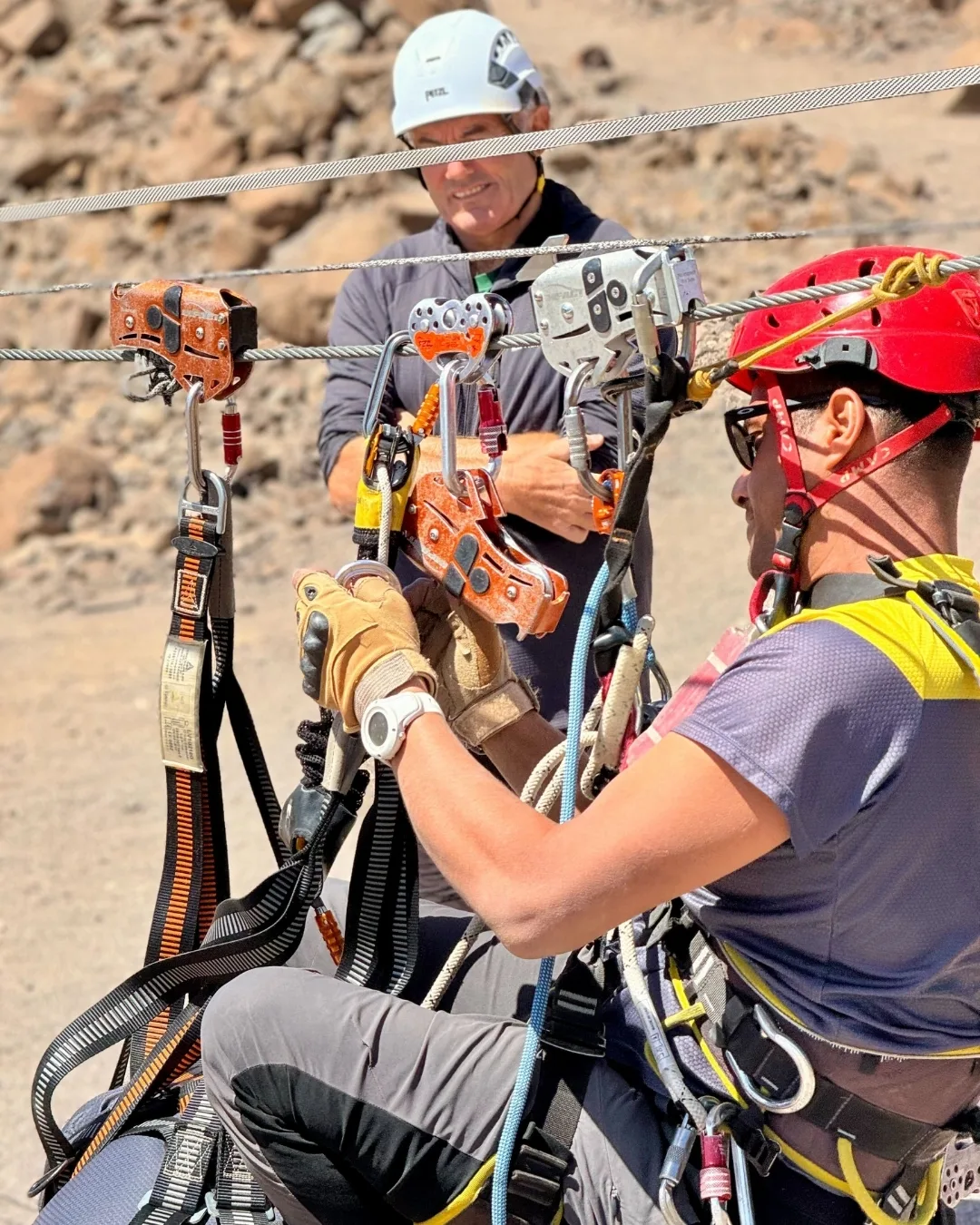
A commercial zipline is a tensioned cable system that converts gravitational potential energy into rider velocity across a controlled span. The engineering objective is to deliver a consistent, thrilling ride profile across a wide range of rider weights and environmental conditions, while maintaining structural integrity under repeated dynamic loading over the design life of the installation.
The core design calculation balances span length, elevation drop, cable tension, and dynamic sag. Cable tension must be high enough to prevent excessive sag under the heaviest rider load, but not so high that peak forces at the anchor points exceed the structural capacity of the towers or rock anchors. Dynamic sag, which is the additional deflection caused by the moving rider, must be modelled across the full weight range the operator intends to serve. A poorly modelled cable will deliver an inconsistent ride, with lighter riders stalling short of the landing platform and heavier riders arriving at unsafe velocity.
Structural anchoring is the next design layer. Ziplines terminate either in engineered towers, which allow siting flexibility on open ground, or in direct anchorages into rock or existing structural spaces. Tower-mounted systems require reinforced concrete foundations sized to the overturning moment generated by cable tension, plus dynamic amplification factors for peak rider loads. Rock-anchored systems, which are typical in mountain terrain, require geotechnical investigation of the host rock, including compressive strength testing and joint pattern analysis, followed by post-tensioned rock bolts drilled to a depth calculated from the design pull-out load.
Cable specification is a separate discipline. Commercial ziplines use galvanised or stainless steel wire rope, sized according to span and load, with construction patterns selected for a balance of strength, flexibility, and fatigue resistance. Cable terminations, where the wire rope connects to the anchor, are the highest-stress components of the entire system and are subject to strict inspection and replacement protocols under EN 15567-1.
MAXIMISING THROUGHPUT WITH ADVANCED BRAKING SYSTEMS
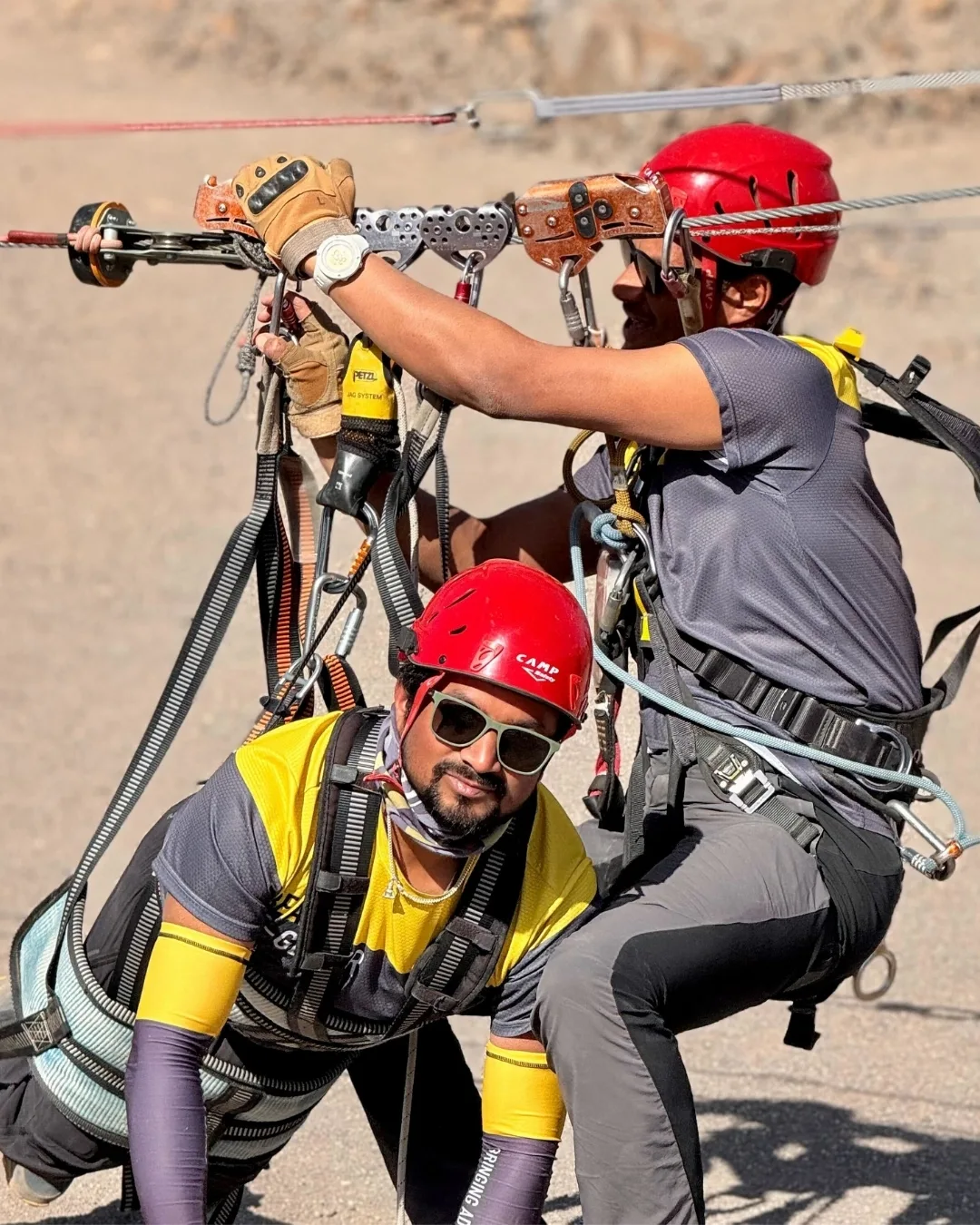
The commercial bottleneck on any zipline is not the launch platform. It is the landing zone. The rate at which riders can be safely decelerated, disconnected, and cleared from the landing platform determines the maximum sustainable throughput of the entire attraction, and therefore its revenue ceiling.
Traditional braking systems used passive spring buffers or manual staff intervention to slow arriving riders. These approaches have significant commercial limitations. Passive spring systems deliver inconsistent deceleration profiles across the rider weight range, leaving light riders under-braked and heavy riders subjected to uncomfortable peak forces. Manual braking requires trained staff at the landing platform for every arrival, which imposes a hard labour cost floor and introduces operational variability.
Modern commercial zipline installations use magnetic or eddy-current braking systems. These technologies use the interaction between a moving conductor and a magnetic field to generate a resistive force proportional to velocity, which means they deliver stronger braking to faster riders and gentler braking to slower riders automatically. The commercial impact is significant. Magnetic braking allows the operator to serve the full weight range without configuration changes, removes the requirement for manual intervention at the landing platform, and materially reduces landing cycle time. On a heavily utilised commercial line, this improvement can lift effective throughput and daily revenue substantially versus a manually braked equivalent.
Beyond the braking system itself, throughput is influenced by the launch platform design, the ratio of trolleys available to riders per cycle, and the return system that moves trolleys back to the launch point. Continuous cable systems, dual-line parallel installations, and integrated retrieval mechanisms all contribute to a higher sustainable operating tempo.
SITE SELECTION AND TERRAIN OPTIMISATION
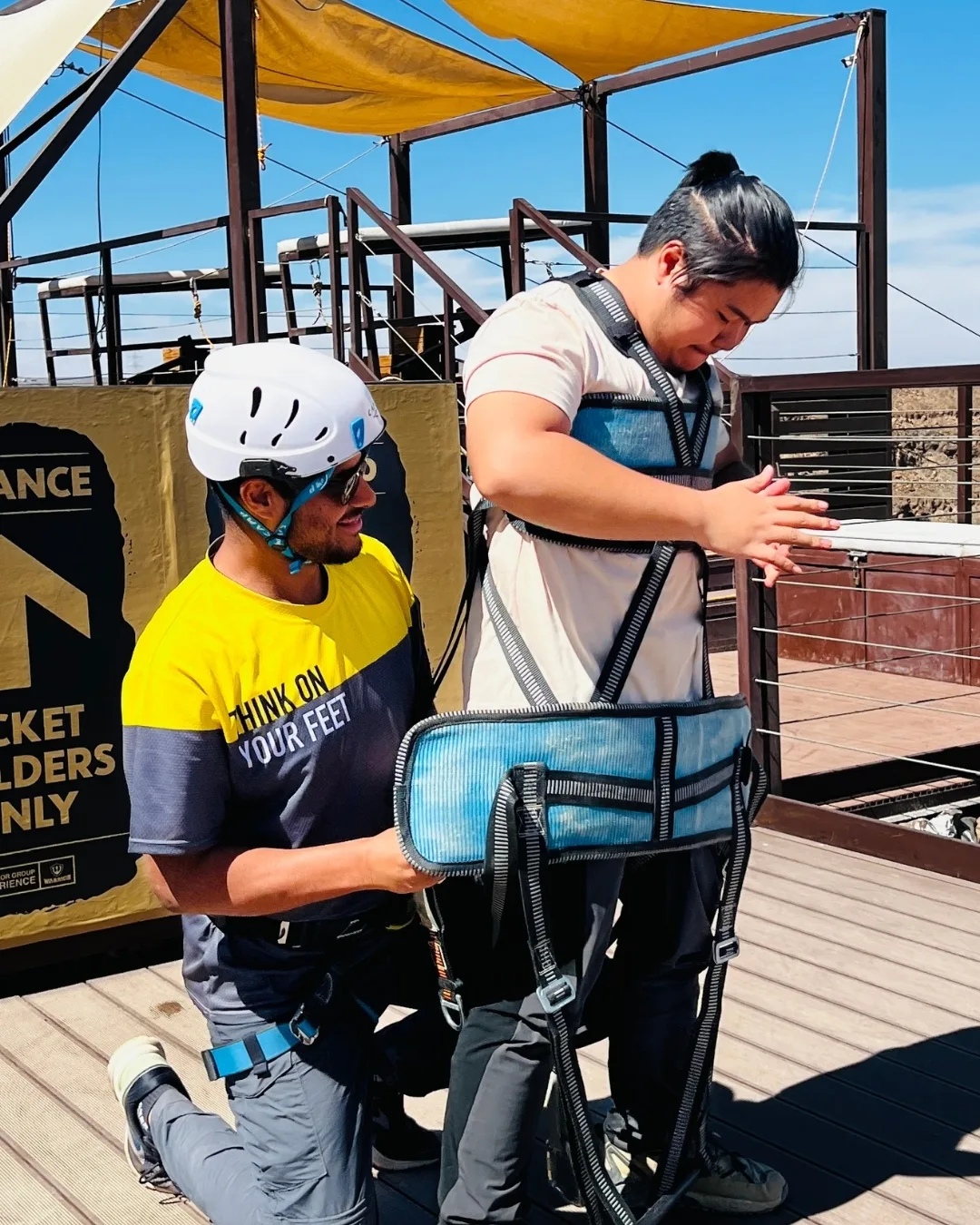
The single most consequential decision in a zipline project is the site itself. Cable length, elevation drop, and visual context all combine to determine the guest experience, and therefore the pricing power of the attraction. A short zipline over open flat terrain and an identical-length zipline across a dramatic canyon are entirely different products, and they command entirely different ticket prices.
The Middle East offers some of the world’s most compelling zipline terrain. The Hajar Mountains in the UAE and northern Oman provide high-relief topography with dramatic wadi crossings. The Sarawat range in western Saudi Arabia offers comparable elevation profiles with expansive desert vistas. Coastal cliff sites along the Musandam peninsula and portions of the Red Sea coast create the visual drama that lifts a zipline from a park attraction into a signature destination experience.
Site selection also drives construction economics. A site accessible by conventional vehicle access is significantly cheaper to build than a site requiring helicopter-assisted material delivery, but the finished product is often less commercially compelling. The engineering task is to identify sites where the natural drama justifies the construction complexity, and to design the installation to preserve the visual integrity of the setting.
THE FINANCIAL MODEL BEHIND A COMMERCIAL ZIPLINE
The commercial performance of a zipline is driven by several variables, ticket pricing, hourly throughput, operation cost, and secondary spend at the launch and landing platforms. Strong locations with cinematic view command premium ticket pricing, and well-engineered dual-parallel installations meaningfully lift throughput because they allow paired guests to descend together, which drives both operational efficiency and social media capture.
Capital cost scales with span length, terrain complexity, and access difficulty. Tower-mounted single-line installations on accessible ground sit at the more economical end of the range. Mountain-terrain flagship installations with dual parallel lines, custom launch and landing architecture, and helicopter-assisted anchor installation sit at the higher end. Against these capital profiles, well-located flagship ziplines can deliver strong revenue on a modest operational footprint, which is why they remain one of the highest-yielding capital deployments available in the leisure sector.
The result is that a well-engineered commercial zipline is one of the most attractive capital investments in the leisure sector, provided the engineering is rigorous, the braking system is modern, and the site is genuinely compelling.
PARTNER WITH SPECIALIST ZIPLINE ENGINEERING AND CONSTRUCTION
Commercial zipline installation is a specialised engineering discipline. Structural design, cable dynamics, braking system integration, geotechnical anchoring, and site logistics all have to converge, and the tolerance for error is minimal. Choosing a contractor with genuine zipline-specific engineering credentials, rather than a general adventure builder, is the single most important commercial decision in the project.
The Warrior Group’s Construction Division delivers turnkey commercial zipline installations across the region. Our capability covers site feasibility and terrain analysis, structural engineering, cable and anchor system design, magnetic braking integration, safety certification to EN 15567-1, and operational handover including staff training and inspection systems. Our project portfolio spans mountain, coastal, and urban installations across the Middle East and Europe.
Contact The Warrior Group’s Construction Division to discuss your site, review terrain feasibility, or model the commercial case for a flagship zipline installation on your property.