
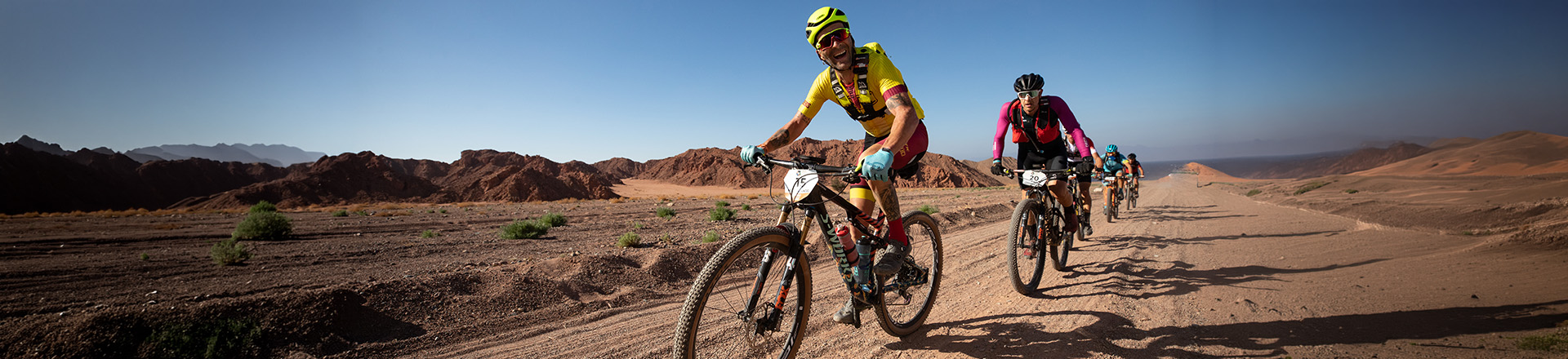
Saudi Arabia and the UAE now plan adventure and eco-tourism as part of national economic diversification, alongside beach resorts and city breaks, and are putting capital, regulation and infrastructure behind it.
Saudi Arabia’s Vision 2030 targets 150 million annual visitors by 2030, split between international and domestic travellers, a target Minister of Tourism Ahmed Al-Khateeb announced in October 2023. The UAE Tourism Strategy 2031, launched in November 2022, targets AED 450 billion (about USD 122.5 billion) in tourism GDP contribution and 40 million hotel guests a year, backed by AED 100 billion (about USD 27.2 billion) in additional tourism investment.
For developers and operators, these targets matter. When a government names adventure and eco-tourism as a national priority, capital, licensing and infrastructure tend to follow. Where each strategy places its weight is a useful starting point for deciding where and how to enter.
SAUDI ARABIA: CAPPED COASTAL DEVELOPMENT AND INLAND HERITAGE TOURISM
Saudi Arabia’s approach to eco-tourism is clearest on its Red Sea coast. Red Sea Global is developing The Red Sea and AMAALA destinations. The plan sets limits from day one. Red Sea Global has said that less than 1% of The Red Sea destination’s area will be developed, that visitor numbers there will be capped at 1 million a year to protect the surrounding biodiversity, and that it is targeting a 30% net conservation benefit by 2040.
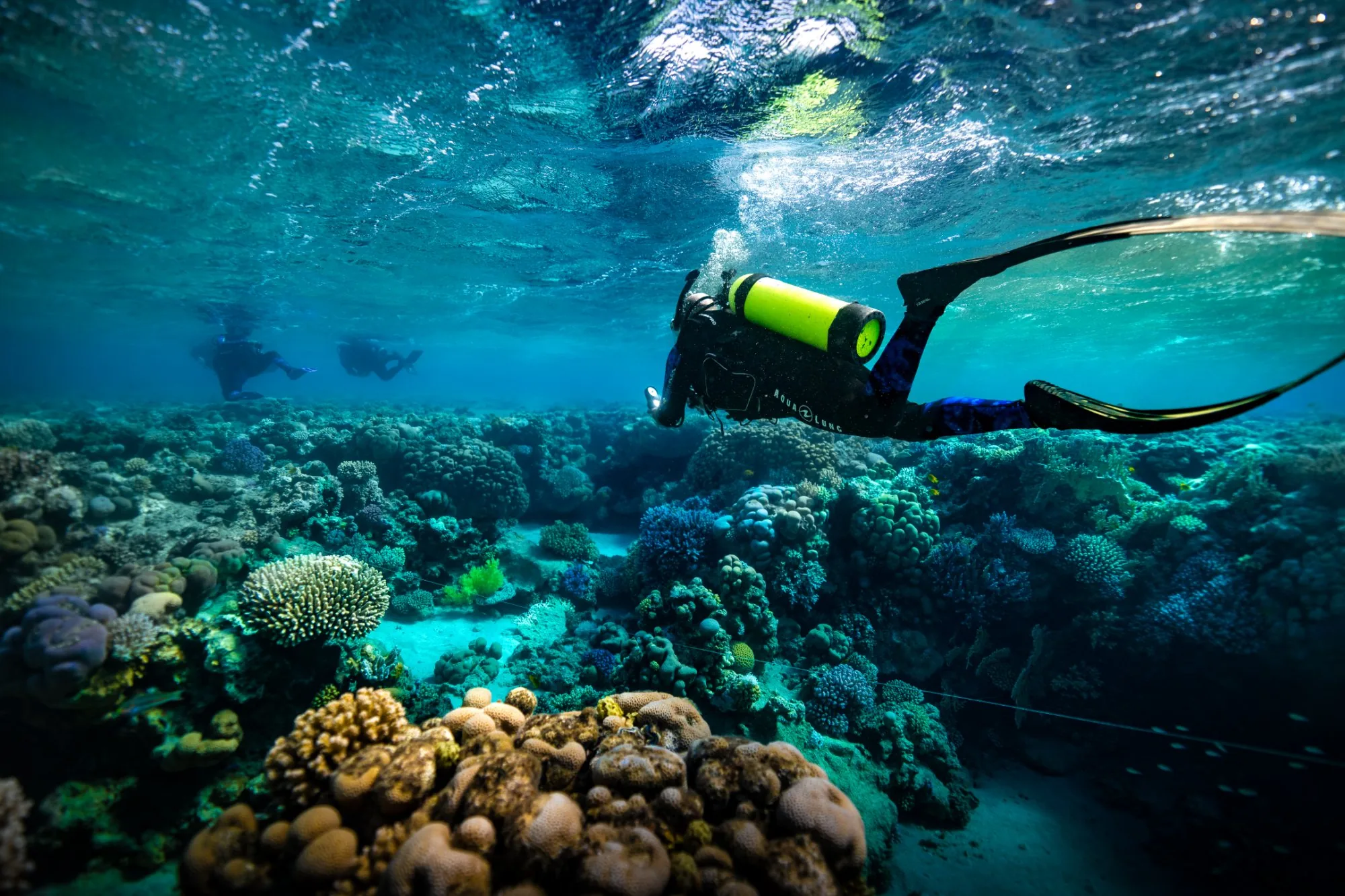
The Red Sea coast model is built around premium, carefully managed visitation and strict ecological standards, and brings construction, guest capacity and environmental performance together from the outset. Warrior Group has contributed directly to the development, delivering ropes-course and adventure-park on the Red Sea coast since 2023, alongside supporting infrastructure including a suspended skybridge built into the natural setting.
Inland, AlUla is home to Hegra, Saudi Arabia’s first UNESCO World Heritage Site, while the Kingdom’s mountain and desert regions support a complementary adventure and heritage tourism model. Warrior Group has developed and operated the AlUla Adventure Hub since 2019. Together, these give Saudi Arabia two distinct and connected propositions: premium, capacity-managed luxury eco-tourism on the coast and larger-scale adventure and cultural tourism inland.
THE UAE: A NATIONAL STRATEGY AND AN ADVENTURE CORRIDOR IN THE HAJAR MOUNTAINS
The UAE Tourism Strategy 2031 coordinates tourism across all seven emirates. It sets four priorities: a unified national tourism identity, diversified specialised tourism products, stronger tourism capabilities and increased investment. Within this, Ras Al Khaimah has built a strong adventure and eco-tourism offering, alongside Dubai’s entertainment and retail, Abu Dhabi’s cultural institutions and natural sites, and Sharjah’s cultural heritage.
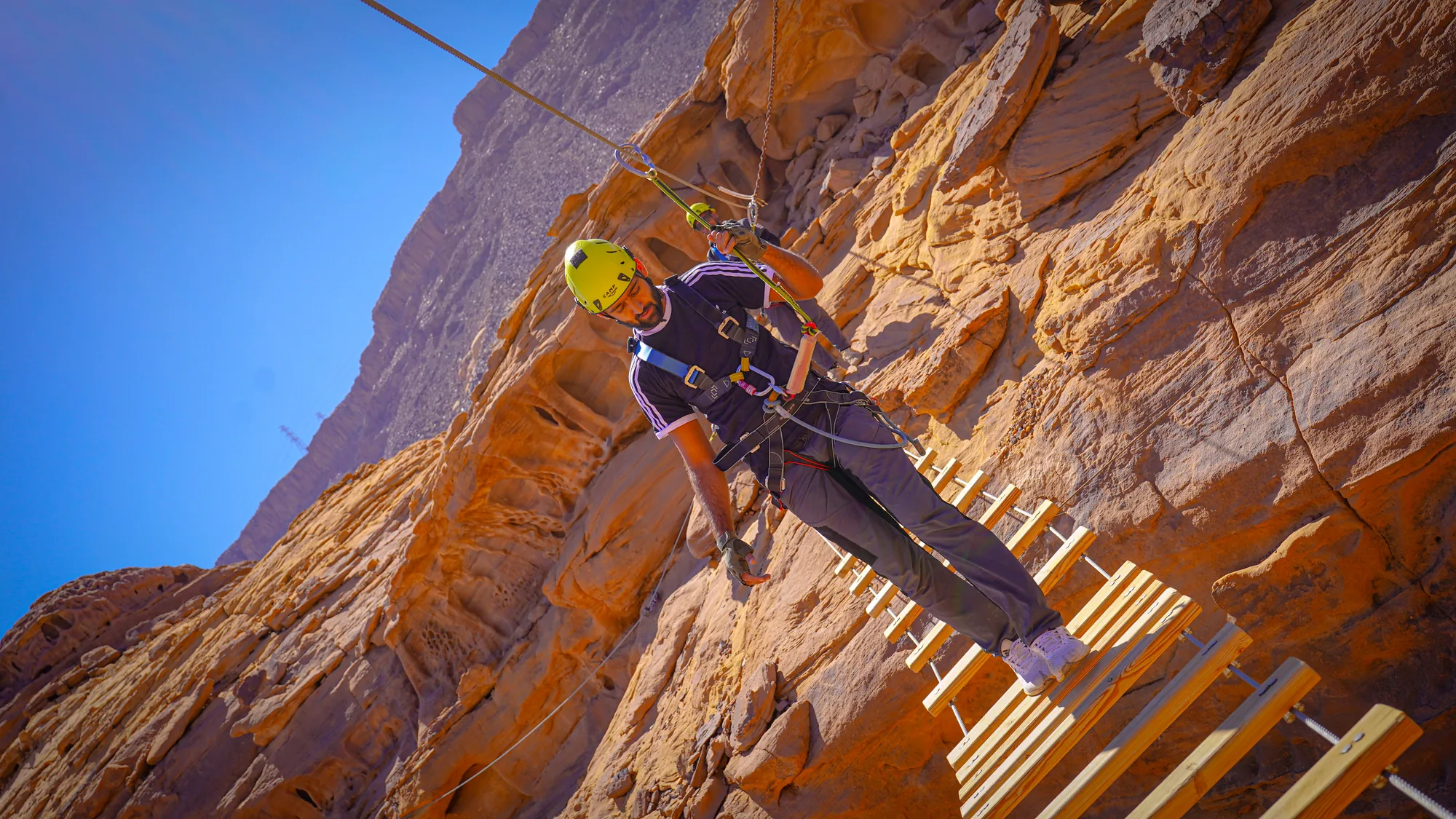
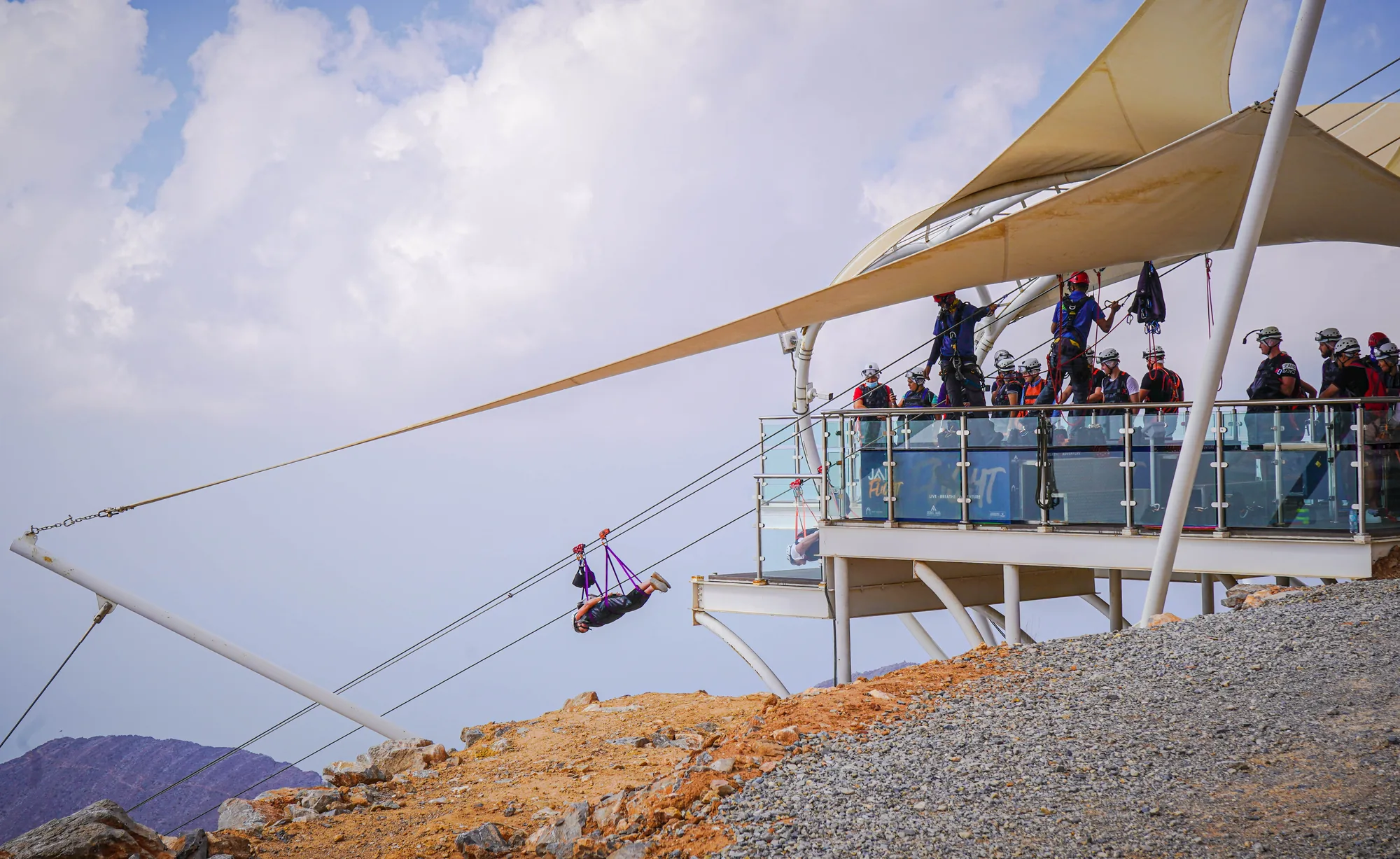
The Hajar Mountains, which run through Ras Al Khaimah into Fujairah and northern Oman, already support high-relief adventure attractions including zipline and via ferrata installations. Warrior Group operated the Jebel Jais Zipline, Jais Sledder and Bear Grylls Explorers Camp in Ras Al Khaimah from 2021 to 2023. When it opened in 2018, the Jebel Jais Zipline was the world’s longest zipline at 2.83 kilometres, according to Guinness World Records. The group also delivered the second phase of Fujairah Adventure Park, including the highest giant swing in the UAE, in under six months.
WHAT DEVELOPERS AND OPERATORS NEED TO GET RIGHT
Naming adventure and eco-tourism as national priorities creates strong conditions for investment. Developers get the most value when site selection, compliance, delivery and operations are planned together from the outset. Four practices matter most.
- Match the development model to the terrain before committing capital. Coastal, mountain and desert settings each need a model set by their access, climate, topography and ecological carrying capacity. Sensitive coastal and marine sites suit a constrained, premium model. More resilient desert and mountain terrain can take a larger footprint.
- Build certification into the timeline from feasibility. Environmental and safety compliance is a market entry requirement for licensing, financing and delivery, and should not be left to a late stage. Vision 2030 and the UAE Tourism Strategy 2031 both carry national sustainability commitments, and a project designed around them from the start is easier to fit with the licensing and investment priorities each country has set out.
- Choose sites in the terrain each national strategy has prioritised. Start from the priorities set out in Vision 2030 and the UAE’s emirate-level offering, then select the site. Choosing a site first and looking for a fit with national policy afterwards is harder.
- Plan capacity limits as a commercial asset. Visitor caps and phased capacity, an approach visible in premium coastal destinations across the region, limit growth, and they can also support pricing power and long-term destination value.
FREQUENTLY ASKED QUESTIONS
Why are Saudi Arabia and the UAE prioritising adventure and eco-tourism?
Both countries are diversifying their economies away from oil. Adventure and eco-tourism attract high-value, repeat visitors and make use of terrain and heritage that set the region apart from purely urban or beach-resort competitors.
Does a lower visitor cap make an eco-tourism site less commercially viable?
Not automatically. Scarcity and a premium offer can support strong pricing, provided the attraction mix, guest experience and operations are built for that offer from day one.
How does site selection differ between coastal and inland terrain in this region?
In our project experience, coastal sites, particularly in ecologically sensitive marine areas, generally call for a more constrained, high-value development model. Inland desert and mountain terrain generally supports a larger-footprint, multi-activity approach. We have delivered both types of site, and the construction and masterplanning approach differs considerably between them.
What should developers prioritise first when entering this market?
Based on our project history across Saudi Arabia and the UAE, developers should first match the development model to the ecological and national policy profile of the terrain, and build environmental and safety certification into the design process during feasibility.
DISCUSS A SITE IN SAUDI ARABIA OR THE UAE WITH WARRIOR GROUP
Warrior Group’s Construction Division has delivered adventure and eco-tourism projects in Saudi Arabia and the UAE, including for Red Sea Global and in AlUla, Ras Al Khaimah and Fujairah. This gives us a direct, on-the-ground view of how both national strategies translate into commercial projects.
If you are evaluating a site in Saudi Arabia or the UAE, or sizing an adventure or eco-tourism development against either country’s national tourism strategy, we would welcome the conversation.
Contact Warrior Group’s Construction Division to discuss your site and build the commercial case for your next adventure or eco-tourism destination.