
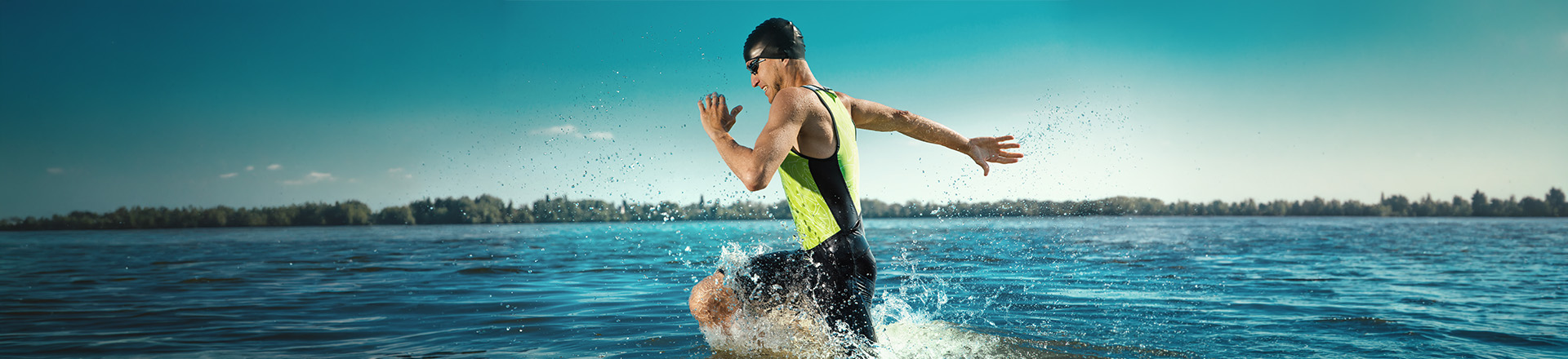
Two years ago, you could draw a clean line between sport tourism and adventure tourism.
Sport tourism was about stadiums. A grand prix, a title fight, a golf major, a football final, you flew in, you sat down, you watched, you flew out. The stadium was the product. The city was the backdrop. Everyone knew their role.
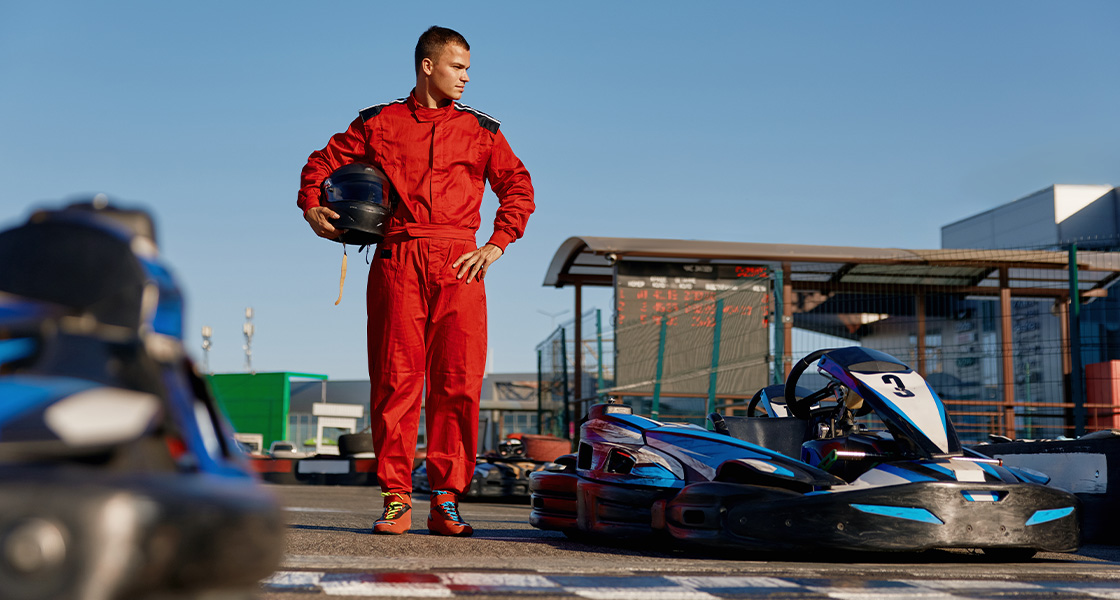
Adventure tourism was about landscape. A climb, a trek, a dive, an expedition. You flew in, you went into the mountains or the desert or the water, you came out changed. The landscape was the product. The city was a waypoint. Different crowd, different itinerary, different spend.
That line is dissolving. And nowhere faster than in the Gulf.
Look at the 2026 calendar from Riyadh to Muscat and you’ll see what’s actually happening. Sport events are staged inside adventure landscapes. Adventure events are built around spectator-ready formats. Guests arrive for an F1 weekend, and leave having ridden a trail route the pros raced the day before. They book a half marathon in the desert and extend into a diving itinerary on the coast. The demand is flowing between two categories that used to be held apart, and the destinations that recognise it first are quietly rewriting the playbook.
A calendar that stopped choosing sides
Walk through a single Saudi season in 2026 and the pattern is clear: the calendar is no longer split between spectator sport and active experience, it’s layered.
January opens with WWE Royal Rumble at KAFD in Riyadh, its first staging outside North America, alongside AlUla Desert Polo set against sandstone cliffs, the AlUla Trail Race cutting through dramatic terrain, and the AlUla Tour bringing international teams through the valley. One month, multiple formats, one destination logic.
By February, Riyadh doubles down with LIV Golf Riyadh, a floodlit, multi-day tournament wrapped in concerts, drone shows, and a festival atmosphere that moves far beyond traditional golf. It’s competition, but it’s also nightlife, entertainment, and travel trigger, especially with AlUla within easy reach for those extending the trip.
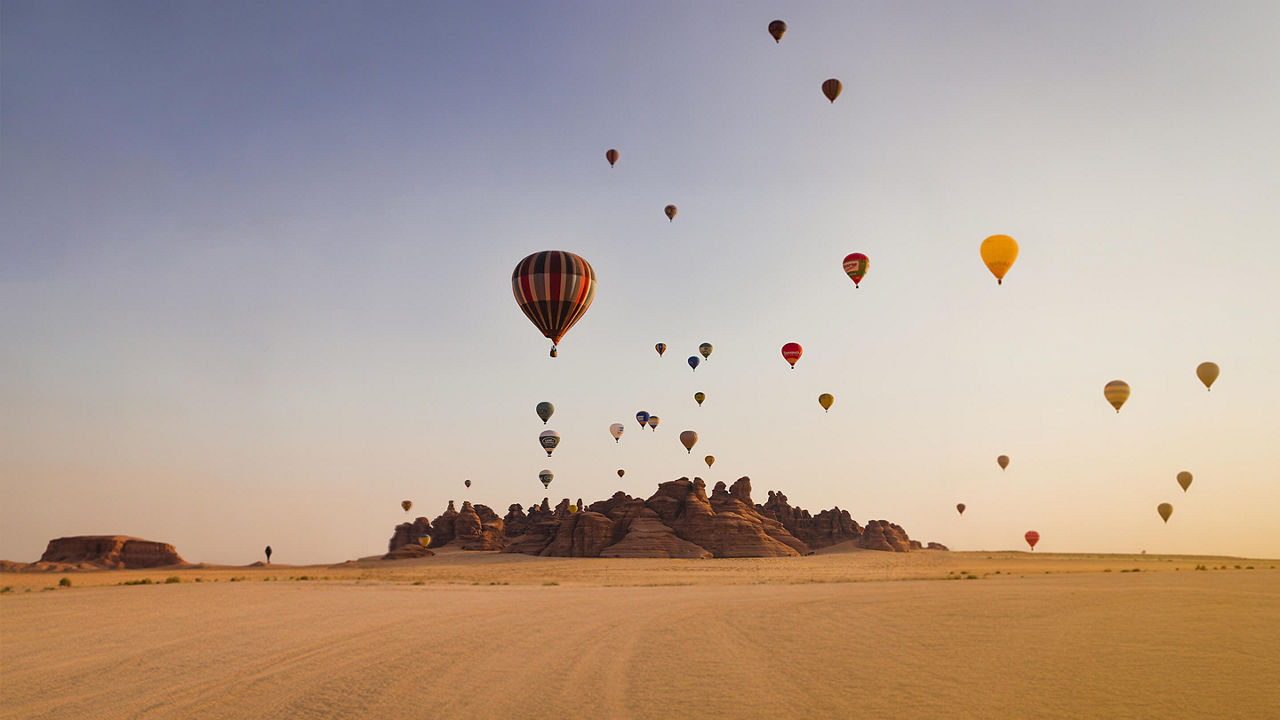
AlUla Skies Festival
April connects global sport with landscape-led experience. The Saudi Arabian Grand Prix takes over Jeddah’s street circuit, while in parallel, the AlUla Skies Festival fills the horizon above Hegra with hot air balloons at sunrise, timed with the Lyrids meteor shower. Different audiences, same window, increasingly the same itinerary.
Summer shifts the focus but not the model. The Esports World Cup runs for weeks across multiple titles, drawing global crowds, while the ongoing development of the Riyadh Sports Boulevard, a 135-kilometre active corridor with cycling, running, and equestrian tracks, and the Global Sports Tower, cements everyday participation as part of the same ecosystem as elite competition.
Step beyond Saudi Arabia and the pattern holds. In Oman, endurance cycling through the Hajar Mountains and trail races across Musandam are pulling international athletes into landscapes that were off the radar a decade ago. Qatar is layering padel, running, cycling, and water sports into districts like Lusail and Qetaifan Island, moving beyond a stadium-led model. In Bahrain, the Bahrain Grand Prix weekend increasingly extends into coastal and active-tourism itineraries.
Why the collapse was inevitable
Strip the surface off and the convergence makes sense.
The traveller who flies to Jeddah for Formula 1 and the traveller who flies to AlUla for the Trail Race are increasingly the same person. Affluent, active, experience-driven, in their thirties or forties, with an Instagram grid that alternates between action shots and tasting menus. They don’t distinguish between sport and adventure at the point of booking. They’re buying a week that moves between spectator intensity, active participation, and cultural discovery, with hospitality that can hold all three.
This is the same traveller who has quietly expanded the definition of sport tourism worldwide. Backroads reports that active travel bookings in 2026 are up roughly 10%, nearly double the post-pandemic pace, with mountain-lodge and hut stays up more than 170% since 2024. The Adventure Travel Trade Association projects the global adventure sector to pass $2 trillion by 2032. Neither number is a sport tourism figure, and both include a large amount of spectator-plus-participation behaviour that would have been filed under sport a decade ago.
The Gulf has something most regions don’t: the ability to design for this convergence from the ground up. New destinations. New calendars. New infrastructure. A rare freedom to build for the traveller who actually exists in 2026 rather than the traveller the old tourism strategies were written for.
What the convergence looks like in practice
Four shifts are doing most of the work.
1. SPECTATOR EVENTS ARE ADDING PARTICIPATION LAYERS.
A Formula 1 weekend in Jeddah used to be race day and little else. Today it’s bracketed by padel tournaments, corniche running events, desert safaris, and branded cycling rides. The AlUla Tour, a UCI-sanctioned race for elite cyclists, now runs alongside amateur sportive distances that let spectators ride the same routes the pros raced a day earlier. The stadium has become a moment inside a wider active itinerary.
2. ADVENTURE EVENTS ARE BUILDING FOR SPECTATORS.
AlUla’s endurance calendar, the Half Marathon, 24-Hour Endurance Race, Ashar Valley Triathlon, is produced with broadcast values, start-line hospitality, and festival programming wrapped around it. Trail running in the Gulf is becoming photogenic, branded, and increasingly attended by non-participants. The Hajar Mountains’ cycling challenges are drawing crowds who don’t ride but come for the atmosphere. Adventure is learning from sport’s production discipline.
3. INFRASTRUCTURE IS SERVING BOTH CROWDS AT ONCE.
The Riyadh Sports Boulevard is the clearest example. A single 135-kilometre park serves the morning jogger, the cycling club, the equestrian rider, and the weekend climber, with the Global Sports Tower as a vertical anchor where elite athletes train in the same facility the public visits. The infrastructure is not designed around a single sport or a single demographic. It’s designed around an active lifestyle that moves between them.
4. HOSPITALITY IS BEING REBUILT FOR THE OVERLAP.
The traveller who comes for LIV Golf and extends to AlUla doesn’t want a generic five-star resort in both places. They want a hotel that works for a tournament weekend and a lodge that works for a desert traverse, and they want those two stays to feel like coherent chapters of the same trip. Adventure hospitality, lightweight and activity-led, is emerging as the natural counterpart to the urban luxury hotel in this itinerary. One captures the spectator moment. The other captures the experiential one. Increasingly, the same developer is building both.
What this means for operators and investors
The convergence has implications that go well beyond programming.
Destinations that treat sport tourism and adventure tourism as separate strategies are about to find themselves competing against destinations that treat them as a single demand stream. AlUla has done this intuitively: music festival, endurance calendar, heritage programming, cultural residences, all operating inside a single year, and the results show up in average stay length, return visitation, and brand gravity.
Investors underwriting hospitality in 2026 should be reading the convergence as a signal about asset design. The hotel that only serves one type of guest, one type of occasion, is increasingly fragile. The hospitality product that can host a spectator on Friday and a trail runner on Saturday, that can serve an F1 weekend audience and an endurance race field, is structurally more resilient. This is particularly true for lightweight, adventure-led properties positioned near active-lifestyle infrastructure, because they capture the overflow demand from spectator events without relying on them.
For operators, the brief is about fluency across formats. A team that can run a climbing wall, a trail race base camp, a corporate adventure day, and a spectator hospitality suite at a regional tournament is a team that has a year-round calendar rather than a seasonal one. Versatility is the new scale.
The next five years
The Gulf’s mega event calendar is about to compress even further. Riyadh will host Expo 2030 from 1 October 2030 to 31 March 2031, with more than 42 million visits expected, while Saudi Arabia’s 2034 FIFA World Cup bid positions the tournament across five host cities, 15 proposed stadiums, and 10 additional host locations.
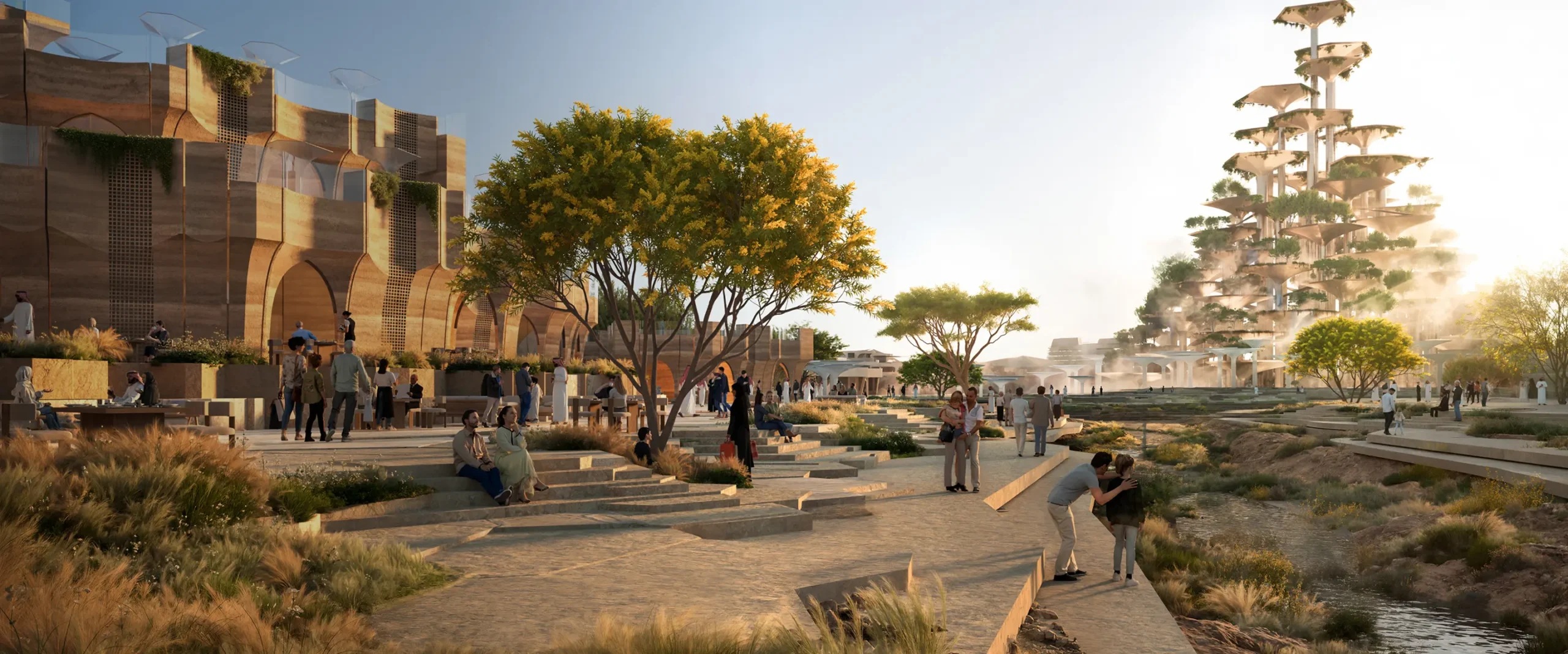
Rendering showcases the masterplan for the Expo 2030 site in Riyadh
Qatar will host the Doha 2030 Asian Games, and the UAE continues to hold major recurring global sports fixtures such as the Abu Dhabi Grand Prix, with the 2026 race scheduled for 4 to 6 December. For adventure operators, the opportunity is not only the event itself. It is the demand that forms around it. A football fan arriving in Saudi Arabia in 2034, a business visitor attending Expo 2030, or a motorsport audience travelling to Abu Dhabi is also a potential customer for the region’s wider active landscape. This is where the convergence becomes commercially powerful. Mega-events create the first reason to travel; adventure creates the reason to extend the stay, explore beyond the host city, and return. The spectator moment becomes the gateway. The active landscape becomes the long-term customer relationship.
Over the next five years, the strongest operators will not treat sport, tourism, and adventure as separate verticals. They will build products around the full visitor journey: pre-event packages, fan-zone activations, day-trip adventures, training camps, corporate challenges, family experiences, and post-event itineraries. The winners will be those who can turn a calendar spike into a repeatable tourism engine.
Sport has brought the world’s attention to the Gulf. Adventure is what can convert that attention into repeat visitation, longer stays, and deeper destination value.
Frequently asked questions
What’s driving the convergence of sport and adventure tourism in the Gulf? A generation of affluent, active travellers is buying trips that mix spectator events, participation sports, and experiential adventure across the same itinerary. Gulf destinations are responding by layering sport calendars, active infrastructure, and adventure hospitality into coordinated year-round programming.
Which Gulf destinations best illustrate this trend? AlUla, with its endurance calendar alongside cultural and music festivals; Riyadh, through the Sports Boulevard and its mix of LIV Golf, Esports, and WWE events; Jeddah, where the F1 Grand Prix is increasingly positioned alongside adventure add-ons; and Oman, where cycling, trail running, and multi-day adventure racing through the Hajar Mountains and Musandam are drawing international fields.
Why is this convergence relevant to hospitality investors? Assets that can host multiple traveller types, spectators, participants, experience-seekers, are more resilient than single-use resorts. The convergence also expands the addressable market for lightweight, activity-led adventure hospitality positioned near sport and active-lifestyle infrastructure.
How does this connect to Saudi Arabia’s Vision 2030? Vision 2030 explicitly identifies tourism, sport, and entertainment as pillars of economic diversification. The convergence of these categories reflects the strategy working as intended, with mega events serving as demand drivers for a broader active-tourism economy.
What does the convergence mean for adventure operators specifically? It widens the commercial opportunity. An operator who can build and run adventure product near a major sport calendar captures spectator spillover, corporate hospitality, and event-adjacent experience demand, alongside the core adventure tourist.
Build for the Gulf’s converging calendar
Warrior Group designs, builds, and operates adventure hospitality and infrastructure across the GCC, including product designed to work alongside the region’s expanding sport and event calendar. If that’s the brief on your desk, we’d love to talk.